Top Oil CEOs Flee Saudi Summit Following Houthi Strikes on Kingdom
10/13/2026 / By Garrison Vance

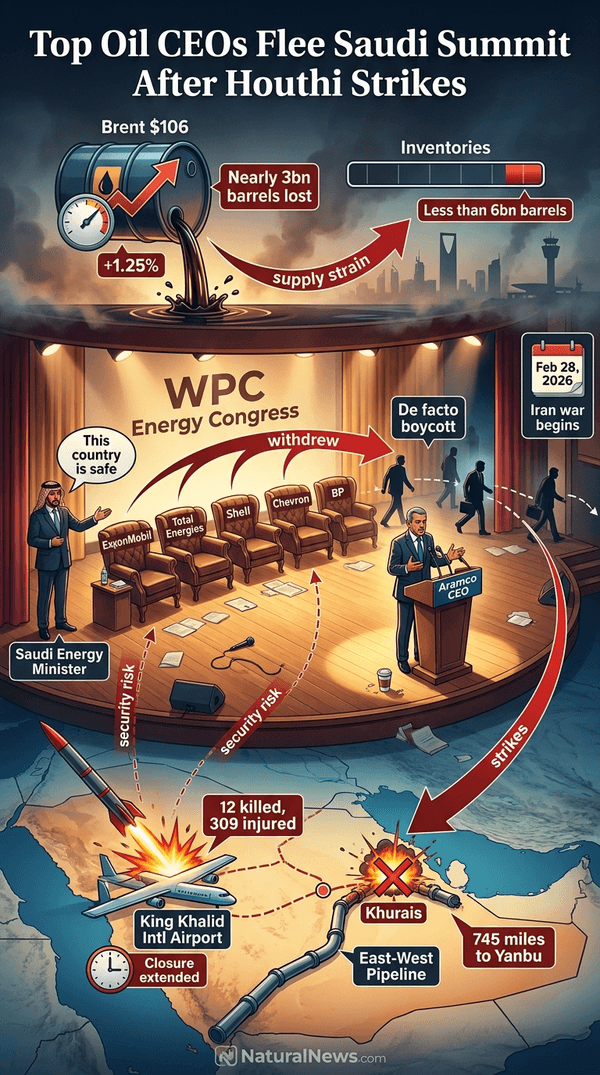
The chief executives of ExxonMobil, TotalEnergies, Shell, Chevron and British Petroleum (BP) were dropped from the schedule of the World Petroleum Council (WPC) Energy Congress in Riyadh on Monday, Oct. 12 – as Saudi authorities proceeded with the event despite deadly attacks on the capital claimed by Yemen’s Houthi movement, according to the revised conference agenda [1][2].
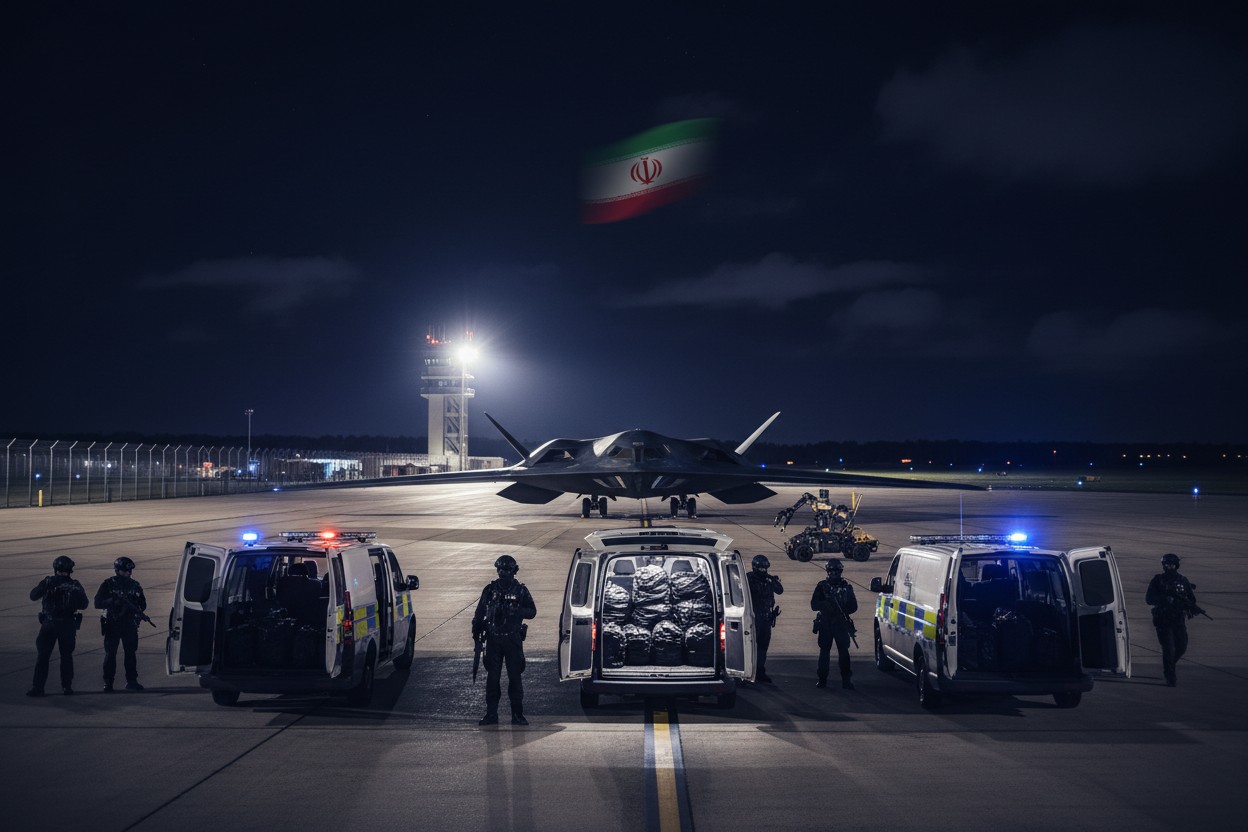
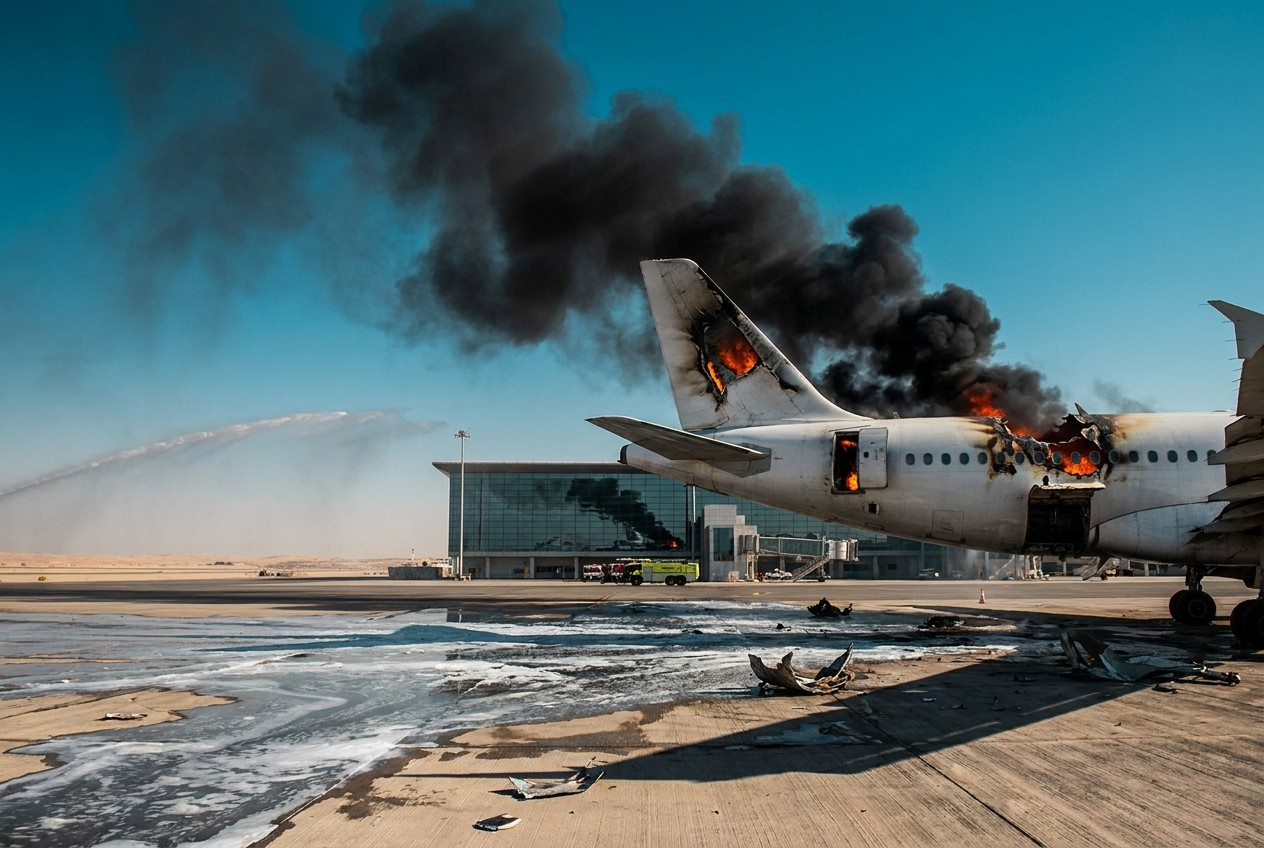
The gathering is taking place at a convention center located about 10 kilometers (6.2 miles) from King Khalid International Airport, which was struck over the weekend, according to Saudi officials [3]. At least 12 people were killed and 309 others were injured in the attack on the airport, according to Middle East Eye (MEE) [4]. Aviation authorities extended the airport’s closure on Monday, an unprecedented move following two weekend ballistic missile attacks, according to ZeroHedge [5].
BP Cites Travel Disruption; Other Firms Silent
A BP spokesperson said the company was unable to attend in person. The chief executives of ExxonMobil, TotalEnergies, Shell, Chevron and BP were no longer on the agenda released by conference organizers, according to Reuters [1]. BP CEO Meg O’Neill had appeared on previous agendas for the conference, according to a report by BOE Report [3].
The event began on Sunday, Oct. 11 and is meant to run until Thursday, Oct. 15 – according to the published schedule [2]. The war began on Feb. 28, 2026, when U.S. President Donald Trump, in concert with Israel, launched Operation “Epic Fury,” a massive air campaign against Iran aimed at regime change and the destruction of its nuclear program, according to a report by the Health Ranger Mike Adams [6].
Saudi Minister Defends Gathering as Aramco Warns on Oil Supply
Saudi Energy Minister Abdulaziz bin Salman addressed attendees at the congress, thanking those who had traveled to Riyadh. “You know this country is safe and that we hold your protection at whole heart,” he added. The Houthi attacks over the weekend marked a sharp escalation in the Yemen war, MEE reported [7].
Aramco CEO Amin Nasser told the conference that global oil supplies remain under severe strain. Nasser said it could take up to two years to replenish inventories while meeting demand, according to the Epoch Times [8].
Separately, Nasser said the conflict reduced oil supply from the region by “nearly 3 [billion] barrels”, with over 1 billion barrels of oil released from reserves to cushion the depletion. He estimated that “less than 6bn barrels of commercial inventories remain today, with the vast majority not practically available”, according to MEE [9].
Oil Prices Rise as Saudi Economy Faces Pressure
The halt to operations at King Khalid International Airport was extended on Monday, and Abha International Airport has also been under fire, according to ZeroHedge [5]. Brent crude rose 1.25% to $106 per barrel, while West Texas Intermediate crude traded at $92 per barrel. The commodity moves followed a weekend of contradictory geopolitical headlines, ZeroHedge separately reported [10].
The pressure on Saudi infrastructure builds on earlier disruptions to the kingdom’s energy network. The East-West pipeline, a 745-mile conduit between Saudi Arabia’s main oil fields in the east and the Yanbu terminal on the Red Sea, was attacked again in early October, with a pumping station east of Riyadh in Khurais sustaining “big damage” before flows resumed, according to a source cited by Agence France-Presse [11].
Yemen Conflict Escalates as Sanaa Warns of Retaliation
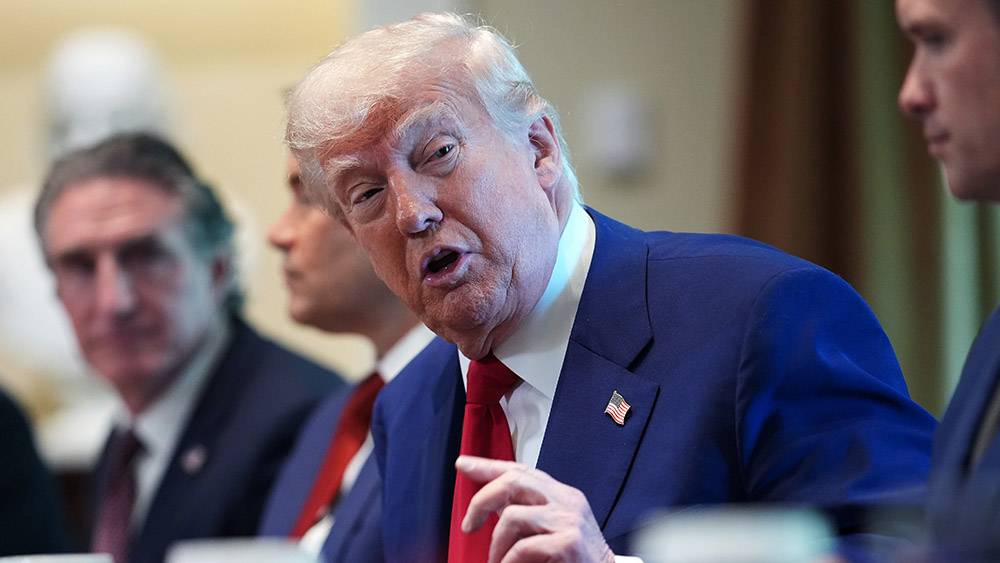
Saudi Arabia has sought to shore up its air defenses amid the strain. The kingdom is running low on missile interceptors and has appealed to France, Britain, Pakistan and Egypt for military assistance [12].Trump said Saturday, Oct. 10, that the United States might join Saudi attacks against the Houthis following the airport strike. [13]
“We just found out about the recent attack,” Trump told reporters at the White House. “So we’ll make a decision. We move very quickly.” [13]
References
- Top oil executives dropped from event schedule after …. https://www.reuters.com/world/middle-east/top-oil-executives-dropped-event-schedule-after-riydah-attacks-2026-10-12/
- Saudi Energy Conference Loses Shell, Exxon, BP Execs – Zerohedge. https://www.zerohedge.com/energy/saudi-energy-conference-loses-shell-exxon-bp-execs-who-bail-after-houthi-strikes
- BP withdraws from Riyadh energy conference after airport attack. https://boereport.com/2026/10/11/bp-withdraws-from-riyadh-energy-conference-after-airport-attack/
- Attack on Riyadh airport leaves 12 dead, more than 300 injured. https://www.middleeasteye.net/news/attack-riyadh-airport-leaves-12-dead-more-300-injured
- Riyadh Airport Closure Extended As Saudi Arabia Projects ‘Normalcy’, Hosting World Petroleum Congress. https://www.zerohedge.com/energy/riyadh-airport-closure-extended-saudi-arabia-projects-normalcy-hosting-world-petroleum
- Why Trump Has Already Lost The Unwinnable War and the Shattered Illusion of American Power – NaturalNews.com, March 05, 2026.
- Saudi energy minister says attacks testing infrastructure, vows ‘serious’ response. https://www.middleeasteye.net/live-blog/live-blog-update/saudi-energy-minister-says-attacks-testing-infrastructure-vows-serious
- Saudi Aramco CEO Warns It Could Take 2 Years to Rebuild Global Oil Stocks. https://theepochtimes.com/world/saudi-aramco-ceo-warns-it-could-take-2-years-to-rebuild-global-oil-stocks-6099528
- Saudi Aramco chief warns of ‘scarily thin’ global oil stockpiles, amid war on Iran. https://www.middleeasteye.net/live-blog/live-blog-update/saudi-aramco-chief-warns-scarily-thin-global-oil-stockpiles-amid-war
- Futures Flat As Oil Rebounds After Trump’s “Energy Ceasefire” Unravels, Memory Stocks Slide. https://www.zerohedge.com/markets/futures-flat-oil-rebounds-after-trumps-energy-ceasefire-unravels-memory-stocks-slide
- Saudi East-West Pipeline Hit By New Attack, But Still Flowing As Normal. https://www.zerohedge.com/energy/saudi-east-west-pipeline-hit-new-attack-still-flowing-normal
- Saudi Arabia Seeks Missile Interceptors as Yemeni Attacks Strain Air Defenses – NaturalNews.com, September 22, 2026.
- Trump Says He’s Considering Whether US Should Join Saudi Attacks Against Houthis. https://theepochtimes.com/us/trump-says-hes-considering-whether-us-should-join-saudi-attacks-against-houthis-6102237
Explainer Infographic
Submit a correction >>
Tagged Under:
Abdulaziz bin Salman, Abha International Airport, Ansar Allah, big government, British Petroleum, chaos, Chevron, Collapse, crude oil, dangerous, energy supply, exxonmobil, fuel supply, Houthi attacks, Houthis, King Khalid International Airport, national security, oil companies, Saudi Arabia, Saudi-Houthi war, shell, supply chain warning, TotalEnergies, World Petroleum Council, WPC Energy Congress, WWIII
This article may contain statements that reflect the opinion of the author
RECENT NEWS & ARTICLES