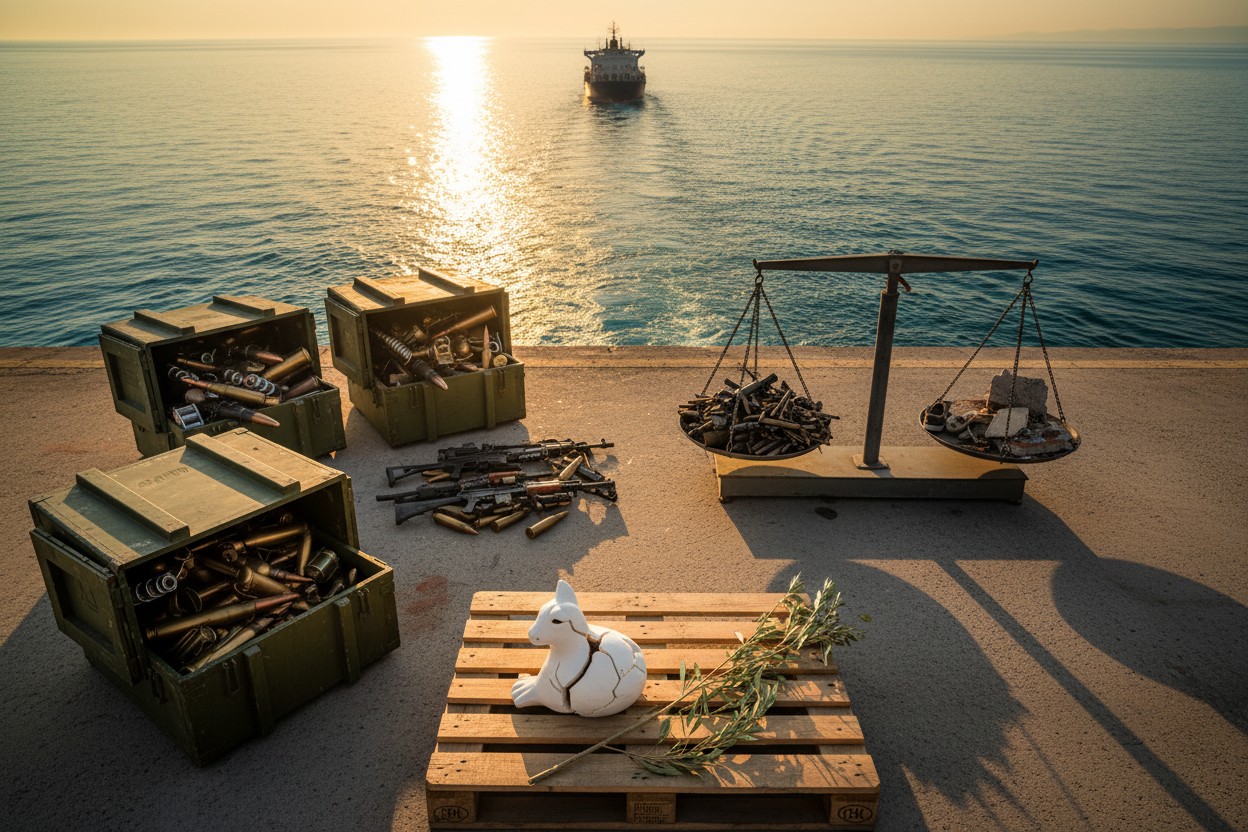
Trump Says He Prefers Iran Deal Over Military Action as Weapon Shortage Reports Surface
08/09/2026 / By Garrison Vance

U.S. President Donald Trump said Wednesday evening, Aug. 5, in Las Vegas that Washington and Tehran are engaged in negotiations and that he would prefer a diplomatic agreement over further military action.
Speaking at an event, Trump stated that the U.S. had been preparing to launch what he described as “the biggest attack since World War II” before Iranian officials requested talks. He added, “I would rather make a deal with Iran because I don’t want to kill people,” while reaffirming his commitment that Tehran would not be allowed to obtain nuclear weapons, according to Middle East Eye.
The comments came as the Washington Post (WaPo) reported that Trump confronted Secretary of War Pete Hegseth over a critical shortage of munitions during the ongoing conflict with Iran. According to sources familiar with the meeting, the president demanded answers after learning about a deficit in vital weapons despite his understanding that the issue had been addressed.
Trump: “I Would Rather Make a Deal With Iran”
At an event at the Red Rock Casino Resort and Spa in Las Vegas, Trump said, “I would rather make a deal with Iran because I don’t want to kill people,” according to Middle East Eye [1]. He reaffirmed that the Islamic Republic would not be permitted to acquire nuclear weapons, a position he has held throughout the conflict. The president indicated that negotiations are underway, stating that Iran had asked for talks and that the U.S. was willing to explore a diplomatic resolution.
The WaPo report, citing unnamed sources, suggested that the shortage of munitions was one factor behind Trump’s decision to pause large-scale strikes against Iran. The report said Trump confronted Hegseth during a cabinet meeting last week after finding out about the deficit. Hegseth reportedly defended himself and instead blamed Deputy Secretary of War Stephen Feinberg for the shortages and for not ensuring Trump was fully informed about the state of U.S. stockpiles, according to WaPo [1].
White House Disputes Washington Post Report on Munitions Shortage
White House Press Secretary Karoline Leavitt denied the WaPo report, calling it “100% fake news,” according to Middle East Eye [1]. She stated that Trump “has the utmost confidence” in Hegseth. On Truth Social, Trump wrote that “leakers of these treasonous statements are being hunted down” and that “long term jail sentences will be sought.”
The denial came amid conflicting accounts about the state of U.S. military readiness. While the White House rejected claims of a shortage, independent reports indicated that the War Department’s munitions stockpile has been significantly depleted during the months-long campaign against Iran. One source familiar with recent internal agency reports noted that the army used “virtually all” of its highly accurate long-range, surface-to-air weapons in the same period, according to CNN [1].
Pentagon Inventory Data Shows Depleted Air Defense Systems
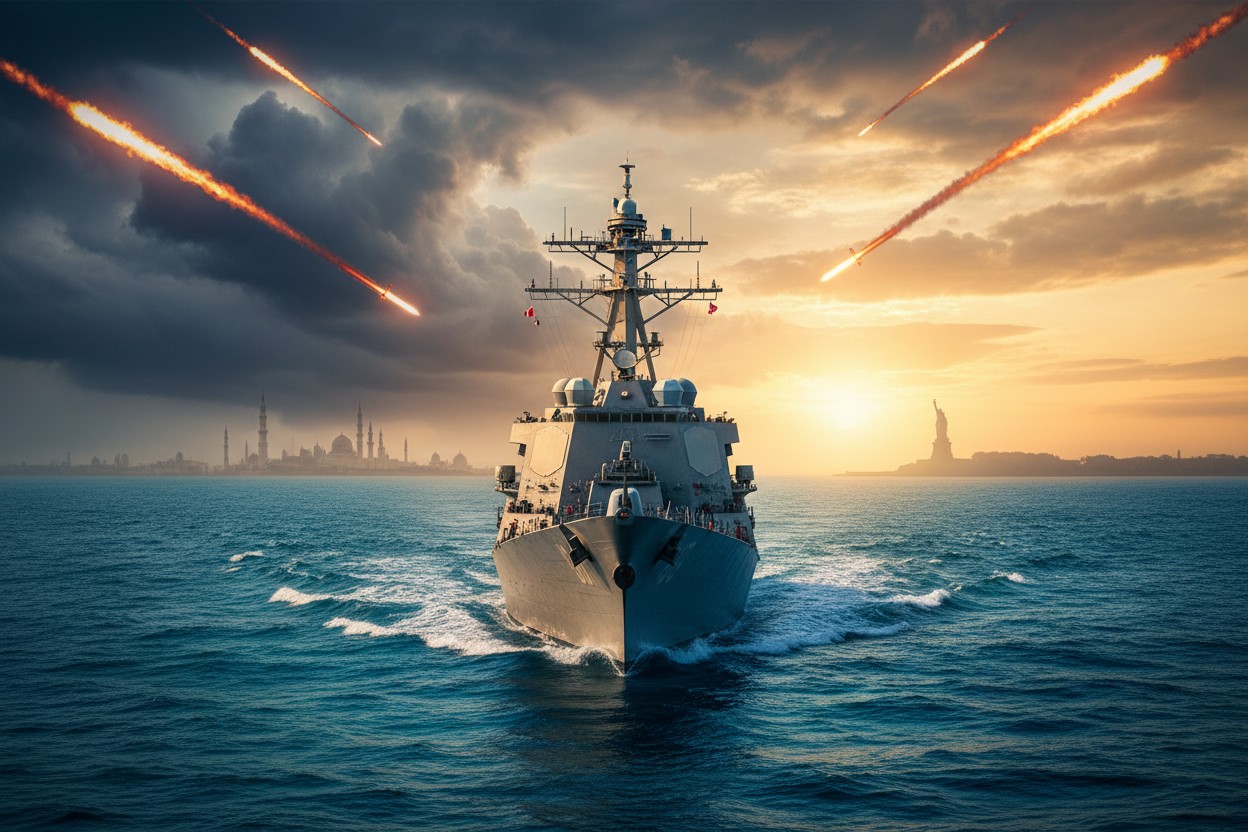
CNN reported on Wednesday that the U.S. military has used nearly 80% of its interceptors for a key missile defense system, citing several sources familiar with the matter [1]. Senior military officials warned that the War Department’s munitions stockpile is “dangerously low,” with Terminal High Altitude Area Defense (THAAD) and Patriot systems particularly depleted.
The U.S. military exhausted nearly four-fifths of its THAAD missile inventory compared with pre-war figures, and half of its Patriot interceptors have been used since the start of the war. Trump responded on Truth Social by asserting, “The U.S. has massive amounts of ‘munitions’, especially of certain types.”
The president added that “large amounts” are being manufactured and shipped to the Middle East “as needed,” and that “defense companies are building the largest number of plants and factories in our country’s history” [1]. His statements contrast with earlier reports from WaPo and CNN that described critical shortfalls in key weapon systems.
Regional Military Activity Continues in Lebanon and Strait of Hormuz
Lebanon’s health ministry reported that eight people were wounded in an Israeli strike on the southern town of Burj Shemali, with state media reporting a “wide-scale aggression” on the city of Tyre, according to Middle East Eye [1]. The fresh wave of attacks comes as Lebanese-Israeli peace talks entered a third day in Rome, the seventh round of U.S.-brokered negotiations. Lebanese negotiators are demanding a ceasefire and the withdrawal of Israeli forces from around 60 villages and towns occupied since March.
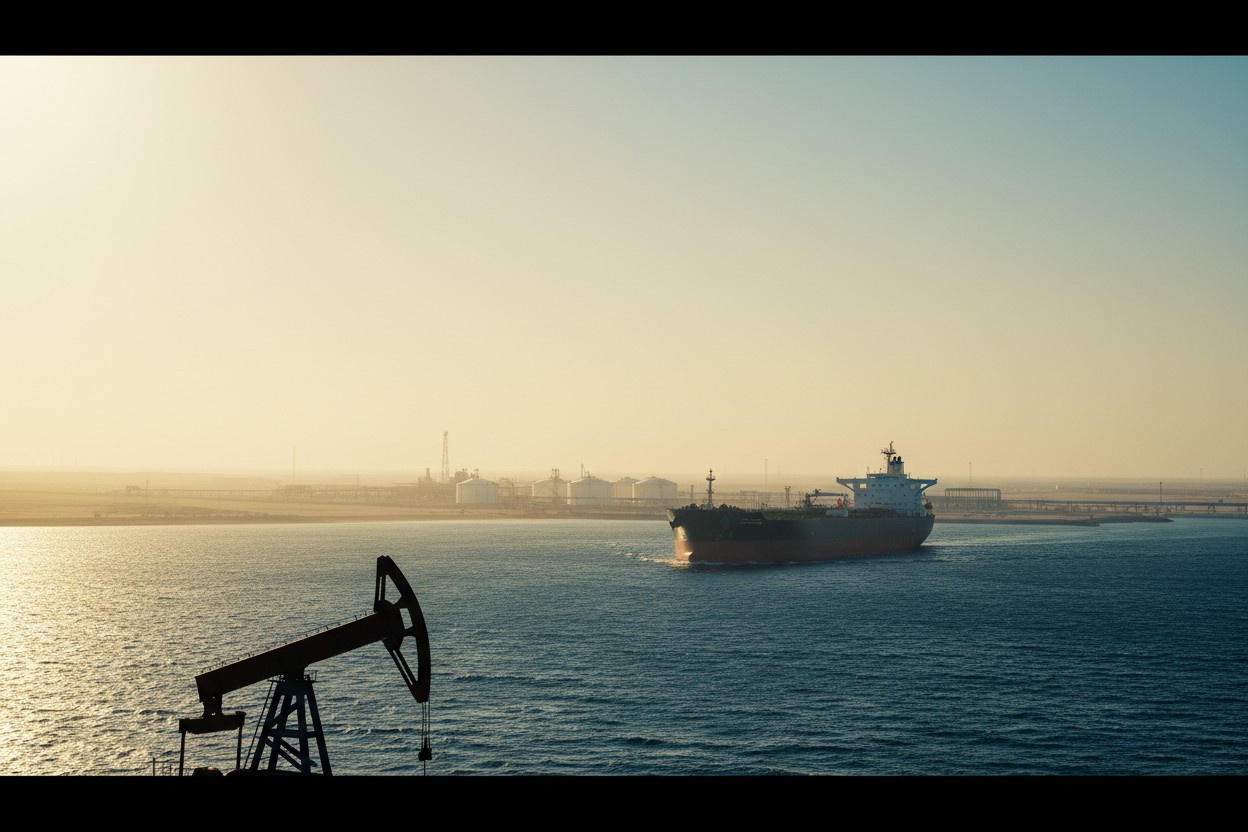
Elsewhere, the United Kingdom Maritime Trade Operations (UKMTO) reported that a tanker near Oman heard two explosions while transiting the Strait of Hormuz early Thursday, Aug. 6. The UKMTO advisory stated that the vessel and crew were safe, with no environmental damage indicated [1]. The incident underscores the ongoing tensions in the waterway, which has been largely closed by Iran since the conflict escalated in February.
Conclusion: Talks Continue Amid Escalation
As of Thursday, no final agreement between the United States and Iran has been announced, according to available reports. Trump continues to deny reports of depleted munitions while asserting that large quantities of weapons are being manufactured and shipped to the Middle East as needed.
Negotiations with Iran proceed despite regional military activity, with Trump warning that the current round is Iran’s “last chance” to secure a deal. The situation remains fluid, with the potential for further military escalation if diplomatic efforts fail.
References
- Middle East Eye. “Iran: Trump says he’d rather make deal than ‘kill people’ amid reports of weapons shortages”. August 6, 2026.
- Cassie B. “Trump chooses negotiation table over Israeli airstrikes in key Iran policy decision”. NaturalNews.com. April 19, 2025.
- Cassie B. “Netanyahu’s Iran attack plan rejected by Trump amid Gaza backlash”. NaturalNews.com. April 17, 2025.
- “Trends-Journal-2024-10-08”.
- “Trends-Journal-2024-08-06”.
- Mike Adams. “Mike Adams interview with Jeffrey Prather – June 25 2025”.
- Middle East Eye. “Trump says he would prefer a deal with Iran to further military action”. August 5, 2026.
- Mike Adams. “Health Ranger Report – MILITARY READINESS DESTROYED”. BrightVideos.com. January 30, 2026.
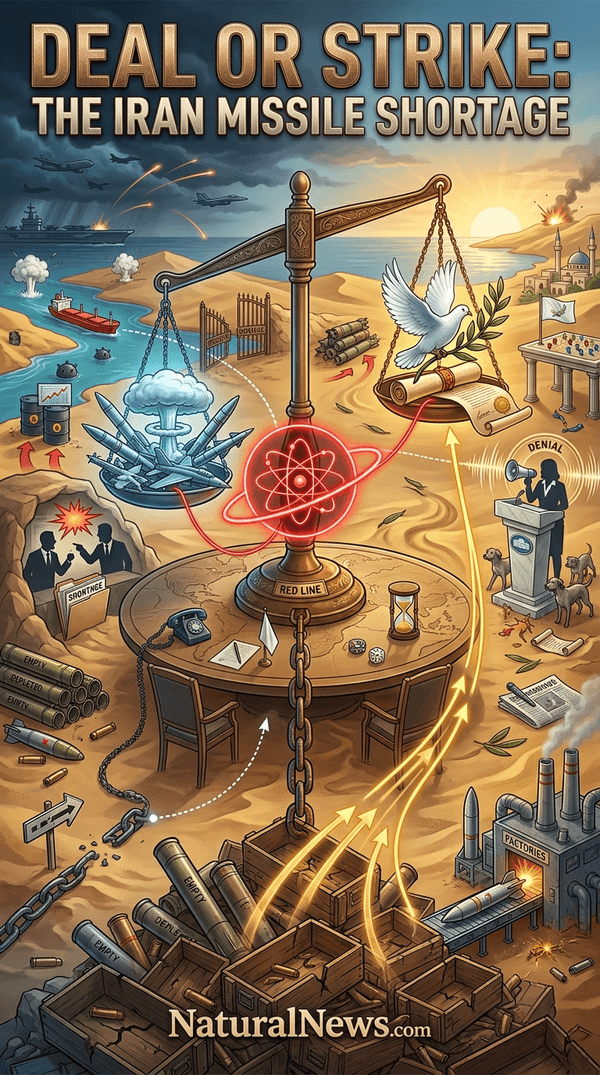
Explainer Infographic
Submit a correction >>
Tagged Under:
chaos, Collapse, dangerous, Department of War, diplomacy, diplomatic solution, Donald Trump, foreign relations, Iran Deal, Middle East, military action, military tech, military technology, missile systems, munitions shortage, national security, Patriot missiles, Pete Hegseth, Strait of Hormuz, Terminal High Altitude Area Defense, terrorism, US military, violence, war on Iran, weapons shortage, weapons technology, WWIII
This article may contain statements that reflect the opinion of the author
RECENT NEWS & ARTICLES